The Office Font: Your New Secret Weapon for Brand Consistency
Let's be honest: finding a font that works everywhere without feeling generic is a designer's holy grail. You need something that looks sharp on a business card, impactful on a billboard, and clear on a mobile screen. You need a typeface that feels professional but not stuffy, modern but not trendy. Enter The Office, a versatile sans serif that’s quickly becoming a go-to for creatives who need reliability and style in one package. It’s the kind of font that doesn’t scream for attention but earns it by making everything you design look intentionally polished.
A Typeface Built for the Modern Creative Workflow
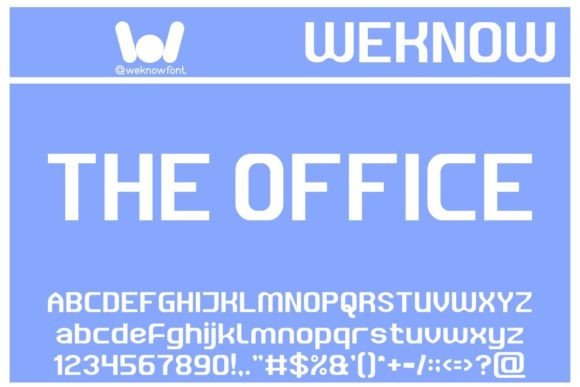
What makes The Office stand out in a sea of sans serifs? It strikes a rare balance. The letterforms are clean and geometric, giving it a structured, professional foundation. Yet, subtle details—like slightly rounded corners or thoughtful spacing—inject a human warmth that prevents it from feeling cold or robotic. This isn't just another minimalist font; it's a carefully crafted tool designed for the realities of today's multi-platform world.
Think about your last project. Did the font you used for your logo also work for the body text on your website? Did it hold up when printed on packaging or embroidered on a hat? The Office was built for this kind of cross-media consistency. Its clear, open counters and balanced proportions ensure high readability at small sizes, while its confident geometry makes headlines and logos unmistakably bold. This inherent versatility means you can establish a single typographic voice for your entire brand, reinforcing recognition every time a customer encounters your work.
From Screen to Print: Practical Applications That Shine
The true test of a premium font is its real-world performance. Where does The Office truly excel? Let's break down its strengths across common design projects.
Branding & Logo Design: Your logo is the cornerstone of your identity. The Office provides a stable, trustworthy base that can be adapted to suit different brand personalities. Paired with a bold weight, it conveys strength and innovation for a tech startup. Used in a regular weight with ample spacing, it feels approachable and clean for a boutique consulting firm. Its neutrality allows your unique brand elements—color, imagery, and voice—to take center stage.
Digital Presence: On websites and blogs, clarity is king. The Office's excellent screen rendering ensures your message is communicated without strain, whether it's a headline on a homepage or a paragraph in a blog post. For social media graphics and YouTube thumbnails, its high-impact weights cut through the noise, delivering your message instantly. It translates seamlessly to digital products, maintaining professionalism in e-books, online courses, and presentation decks.
Print & Packaging: In the physical world, details matter. The Office's crisp edges reproduce beautifully on everything from business cards and letterheads to magazine covers and posters. For packaging design, it offers the legibility needed for product information while providing the stylistic punch for the brand name on the shelf. It’s equally at home on a minimalist wine label as it is on a dynamic event poster.
Merchandise & Editorial: Looking to put your brand on apparel? The Office's clear shapes make it ideal for embroidery and screen printing, ensuring your design looks sharp on caps, t-shirts, and tote bags. For editorial layouts in magazines or book covers, it provides a clean, modern counterpoint to more decorative serif or script fonts, creating engaging visual hierarchy.
Smart Pairing and Practical Implementation Tips
Even the most versatile font benefits from thoughtful implementation. Here’s how to get the most out of The Office.
Pairing with Purpose: The Office plays well with others. For a classic, authoritative look, pair it with a traditional serif font for body text or subheadings. To create a dynamic, contemporary contrast, try combining it with a elegant script or a textured handwritten font for accents. The key is to let The Office handle the heavy lifting for clarity while its companion font adds a layer of personality or emphasis.
Readability is Non-Negotiable: Always test your chosen weight and size in context. A weight that looks stunning in a logo might be too thin for long-form reading on a mobile device. Use the lighter weights for elegant body copy and save the bold and black weights for headlines and calls to action. Pay close attention to line height and letter spacing, especially in digital formats, to ensure a comfortable reading experience.
Understand What's Included: Before you start, review the full font family. A quality typeface like The Office typically includes a range of weights (from Thin to Black) and often matching italics. Some may include stylistic alternates or extended character sets for multiple languages. Knowing exactly what you have allows you to plan your design system more effectively, ensuring you have the right tool for every element.
Licensing for Commercial Peace of Mind: If you're using the font for client work, merchandise, or any project that generates revenue, you must ensure you have the correct commercial license. Reputable foundries and font marketplaces make this clear. Investing in the proper license not only supports the designers who created the tool but also protects you and your business legally. It’s a crucial, non-negotiable step in professional practice.
The Office isn't just a collection of letters; it's a foundational design asset. By providing a reliable, attractive, and adaptable typographic workhorse, it frees you to focus on the bigger creative picture. It helps you build a cohesive visual identity, communicate with clarity, and present your work with a consistent level of professionalism. In a crowded visual landscape, that kind of dependable elegance is what helps a brand stand out and be remembered.