Sukajan Brush: Merging Streetwear Rebellion with Brushstroke Soul
There’s a particular energy you get when you combine the raw, unapologetic spirit of Japanese streetwear with the disciplined flow of traditional calligraphy. It’s a visual tension that commands attention—rough yet refined, rebellious yet deeply rooted in culture. For designers and creatives seeking to inject that exact feeling into their work, the search for the right typeface often ends with discovering something that feels less like a digital file and more like a hand-crafted artifact. This is where the Sukajan Brush font enters the conversation, offering a striking all-caps aesthetic that doesn’t just sit on a page but practically leaps off it.
The Anatomy of a Rugged Typeface
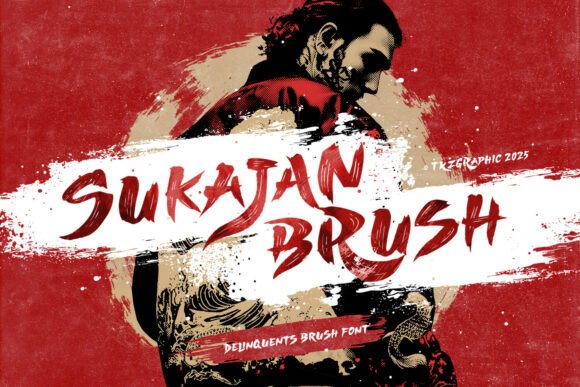
At first glance, Sukajan Brush feels familiar, yet distinctly different. It’s a display typeface characterized by its rugged, textured strokes that mimic the natural pressure and imperfection of an actual brush dipped in ink. You can see the hair of the brush in the serifs and the varying thickness of the lines, creating a sense of movement that static, clean fonts often lack. It draws inspiration from the sukajan (souvenir) jackets of the mid-20th century—those embroidered satin bombers featuring tigers, eagles, and dragons—blending that delinquent cool with the fluidity of Asian brush techniques.
What makes this specific font particularly interesting for digital design is its functional quirk: the alternate letters. In a standard font, typing in all caps can sometimes feel rigid. However, Sukajan Brush utilizes the Caps Lock key as a toggle for different letter variations. This allows you to mix and match styles within a headline, avoiding the repetitive look that often plagues brush fonts. It’s a small detail, but for a logo designer or a branding specialist, that variation is the difference between a generic header and a bespoke wordmark.
Beyond the Usual Suspects: Real-World Applications
When we talk about modern typography, we often gravitate toward clean sans-serifs or elegant serifs for professional work. However, there are moments in design where "professional" needs to mean "memorable," not just "safe." Sukajan Brush thrives in environments where you need to establish an immediate emotional connection or a distinct personality.
Consider the landscape of branding and logo design. If you are launching a streetwear brand, a craft brewery with an edgy vibe, or a music festival, your typeface needs to scream your ethos before the customer reads a single word. The rugged nature of this font makes it an excellent candidate for a primary logo mark. It carries the weight of history—think vintage Americana mixed with Tokyo nightlife—making it perfect for brands that pride themselves on authenticity.
But the utility extends far beyond clothing labels. Think about packaging design. Imagine a hot sauce bottle, a bag of bold coffee beans, or a line of energy drinks. These products rely on shelf presence. Using a premium font like Sukajan Brush for the product name can instantly communicate intensity and flavor profile. The visual texture of the letters suggests something hand-crafted and potent, which is a powerful psychological trigger for consumers.
Digital Presence and Visual Consistency
In the realm of web design and social media graphics, capturing attention is the currency of the realm. We are scrolling faster than ever, and a generic font choice is a missed opportunity. Sukajan Brush is not a body copy font; it is a headline weapon. Using it for your H1 headers on a website or as the overlay text on an Instagram Reel or TikTok video can drastically improve engagement.
Why? Because it breaks the pattern. Most digital content utilizes standard system fonts or overused Google Fonts. When a user sees a typeface that looks like it was painted by hand, it triggers a pause. It feels more human. For content creators and bloggers, using this font for featured images or Pinterest graphics can help establish a visual consistency that becomes recognizable to your audience over time. You aren't just posting content; you are stamping it with a specific vibe.
For movie and game titles, the application is obvious but worth noting. The font has a cinematic quality. It suggests action, grit, and narrative depth. If you are designing a poster for an indie film or a thumbnail for a gaming channel, this typeface provides the dramatic flair needed to set the scene.
Mastering the Pairing Game
One of the most common mistakes designers make with display fonts is using them for everything. Sukajan Brush is bold and high-impact, which means it demands a partner that can play a supporting role without fighting for the spotlight. The art of font pairing is about contrast and harmony.
Because Sukajan Brush is so expressive and textured, it pairs best with clean, neutral typefaces. A geometric sans serif font or a simple, readable serif font works beautifully for body text. You want the reader’s eye to be drawn to the headline by the brush strokes, and then transition smoothly into a clean paragraph for the information.
For example, if you are creating an editorial design layout, use Sukajan Brush for the pull quotes or the article title to add a punch of personality, but stick to a classic serif for the columns of text. This creates a hierarchy that guides the reader's eye and keeps the layout from becoming visually chaotic.
Practical Advice for Implementation
If you are considering adding this creative font to your toolkit, here are a few practical observations to keep in mind regarding design assets and workflow.
- Readability at Small Sizes: Brush fonts with high texture can lose legibility when scaled down significantly. Always test Sukajan Brush at the size it will be viewed. It is excellent for large headers, but avoid using it for footnotes or fine print on print materials like business cards where ink spread might muddy the details.
- The Caps Lock Trick: Take advantage of the alternate characters. If you are designing a word like "BRANDING," try toggling the caps lock halfway through your typing to swap out specific letters. This prevents the "cookie-cutter" look and makes the typography feel more organic, as if each letter was drawn individually.
- Color and Texture: This font looks incredible when placed over textured backgrounds—concrete, grain, or fabric scans. It also holds up well in solid, high-contrast color schemes. Think black and white for maximum impact, or vibrant neon colors for a retro-futuristic aesthetic.
- Licensing for Merchandise: If you plan to use this for commercial font applications—such as selling t-shirts, mugs, or posters—always double-check the licensing terms. Most premium fonts allow for this, but it is due diligence every small business owner and entrepreneur must perform to protect their brand legally.
Blending Personality with Tradition
Ultimately, the value of a typeface like Sukajan Brush lies in its ability to tell a story. In a market saturated with sterile, corporate-looking designs, there is a growing hunger for authenticity and craftsmanship. Whether you are a creative entrepreneur designing a logo, a marketer crafting a bold campaign, or a hobbyist working on a passion project, this font offers a bridge between the rebellious spirit of the past and the digital demands of the present.
It’s not just about looking cool; it’s about communicating a feeling. The rugged strokes speak of resilience and style. By integrating this typeface into your brand identity, you aren't just choosing letters; you are adopting an attitude. It serves as a reminder that in design, the details—the texture, the weight, and the history of a font—can transform a simple message into a powerful statement.