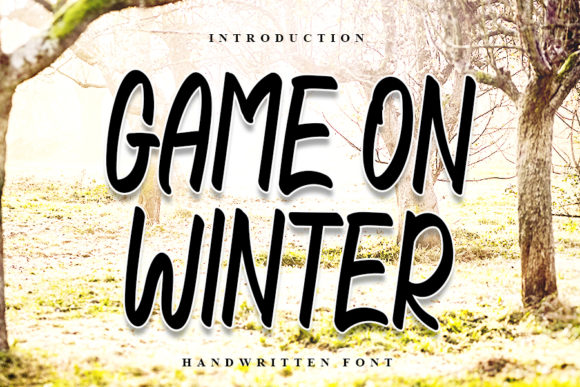
Game on Winter: A Handwritten Font That Brings Cheerful Energy
There's something undeniably magical about the way a handwritten font can transform a flat, lifeless design into something that feels personal and alive. You've probably experienced it before—scrolling through social media or browsing a shop shelf when a particular typeface catches your eye. It doesn't just communicate words; it communicates feeling. That's exactly the kind of energy Game on Winter brings to the table. This bold, cheerful handwritten typeface has a warmth and personality that can instantly elevate your creative projects, whether you're designing a holiday poster, crafting wedding invitations, or building out a brand identity for a cozy small business.
What makes a font like this worth your attention? It's not just about aesthetics—though Game on Winter certainly delivers on that front. It's about finding a typeface that aligns with the emotional tone of your project, connects with your audience, and works reliably across different formats. Let's dig into what makes this font a strong addition to any designer's toolkit and how you can put it to work in practical, meaningful ways.
Why Handwritten Fonts Still Win Hearts
In an era dominated by clean sans serif fonts and minimalist design trends, handwritten typefaces continue to hold a special place. They carry an authenticity that polished geometric fonts simply can't replicate. When someone sees a hand-lettered style on a product label or a social media post, it triggers a subconscious response—this feels human. It feels crafted rather than manufactured.
Game on Winter taps into that appeal with its bold stroke weight and playful letterforms. Unlike thin, delicate script fonts that can sometimes feel fragile or hard to read at smaller sizes, this typeface has enough visual weight to stand on its own. The letters have a natural bounce and rhythm to them, giving your text a sense of movement and liveliness. It's the kind of font that makes people smile before they even read the words.
For small business owners and content creators, this emotional response is incredibly valuable. You're not just choosing a pretty design asset—you're choosing a tool that helps you communicate your brand's personality in a fraction of a second.
Where Game on Winter Truly Shines
One of the best things about a versatile handwritten font is the sheer range of projects it can support. Game on Winter works beautifully across both digital and print applications, which means you're not limited to a single use case. Here are some of the most effective ways to put it to work:
- Social media graphics: Instagram stories, quote posts, promotional banners, and seasonal announcements all benefit from a font that feels approachable and fun. Game on Winter adds personality without sacrificing clarity, which is essential when you're competing for attention in a crowded feed.
- Poster design: Whether it's a community event, a holiday sale, or a workshop announcement, a bold handwritten font creates an immediate focal point. It draws the eye and sets a welcoming tone.
- Invitations and greeting cards: From wedding save-the-dates to birthday party invites, this typeface brings a handcrafted feel that mass-produced templates often lack.
- Packaging design: If you sell handmade goods, artisan food products, or boutique items, a handwritten font on your label can reinforce the story behind your brand. It signals care, creativity, and authenticity.
- Logo design: For brands that want to project warmth, friendliness, and approachability, a handwritten typeface can serve as the foundation of a memorable logo. Pair it with a clean sans serif for body text, and you've got a balanced, professional look.
- Blog headers and editorial layouts: Break up the monotony of standard web typography by using Game on Winter for section headers, pull quotes, or featured article titles. It adds visual interest without overwhelming the reader.
- Digital products: If you sell planners, worksheets, ebooks, or templates, incorporating a handwritten font into your designs can make them feel more premium and thoughtfully designed.
- Merchandise: Tote bags, mugs, stickers, t-shirts—hand-lettered typography is a staple in the merchandise world for good reason. It translates well to physical products and has broad appeal.
Building a Brand Identity with the Right Typeface
Typography is one of the most underrated elements of brand identity. Many entrepreneurs spend hours perfecting their logo or choosing brand colors but give little thought to the fonts they use consistently across their marketing materials. That's a missed opportunity. Your typography choices send a message about who you are as a brand—whether you realize it or not.
A font like Game on Winter communicates creativity, warmth, and approachability. If those qualities align with your brand values, it can become a cornerstone of your visual identity. Think about how it would look on your website headers, your email newsletters, your product tags, and your Instagram highlights. When used consistently, a distinctive typeface helps people recognize your brand before they even see your logo.
That said, consistency doesn't mean using one font everywhere for every purpose. A strong brand typography system typically includes two to three complementary fonts. Game on Winter works best as a display font—for headlines, titles, and accent text. Pair it with a clean, highly readable serif font or sans serif font for body copy. This contrast creates visual hierarchy and ensures your designs look polished rather than chaotic.
Practical Tips for Getting the Most Out of Your Font
Choosing a great font is only half the battle. How you use it matters just as much. Here are a few practical considerations to keep in mind as you incorporate Game on Winter into your projects:
- Test it at multiple sizes. Handwritten fonts can behave differently at small sizes compared to large display sizes. Make sure the letterforms remain legible when scaled down, especially for things like subheadings or caption text.
- Pay attention to spacing. Bold handwritten fonts sometimes need a bit of extra letter-spacing or line-height to breathe. Don't be afraid to adjust these settings in your design software to achieve the best readability.
- Consider your color palette. A cheerful, bold font like this pairs well with warm, vibrant colors—but it can also create a striking contrast against muted, neutral backgrounds. Experiment with different combinations to see what resonates with your project's mood.
- Review the full character set. Before committing to a font for a project, check what's included. Does it have the punctuation marks, numerals, and special characters you need? Many premium fonts come with alternates, ligatures, and stylistic sets that can add variety to your designs.
- Understand the licensing. If you're using the font for commercial purposes—selling products, creating client work, or publishing content for a business—make sure you have the appropriate license. This is a detail that's easy to overlook but important to get right from the start.
Making Typography Work Harder for You
Good typography doesn't just look nice—it does real work. It guides the reader's eye, establishes hierarchy, reinforces your message, and creates an emotional connection. When you choose a font like Game on Winter, you're investing in a design asset that can serve you across dozens of projects over months or even years.
The key is to use it intentionally. Don't slap a handwritten font on everything just because it looks pretty. Think about what you're trying to communicate and who you're trying to reach. A playful, bold typeface is perfect for a children's clothing brand, a bakery's social media presence, or a holiday marketing campaign. It might not be the right fit for a law firm's annual report or a financial services website—and that's okay. The best font choices are always tied to context.
Take the time to experiment. Try different font pairings. Test your designs on real screens and in real print. Ask for feedback from people in your target audience. The more you work with a typeface, the better you'll understand its strengths and limitations—and the more effectively you'll be able to use it to bring your creative vision to life.